LED TV CKD vs SKD vs OEM vs ODM: A Buyer's Guide for TV Brands and Importers
Compare LED TV CKD, SKD, OEM and ODM sourcing models. Learn how TV brands, importers and assembly partners can evaluate costs, responsibilities and production readiness.
◷ Nov 2, 2026 · 6 min read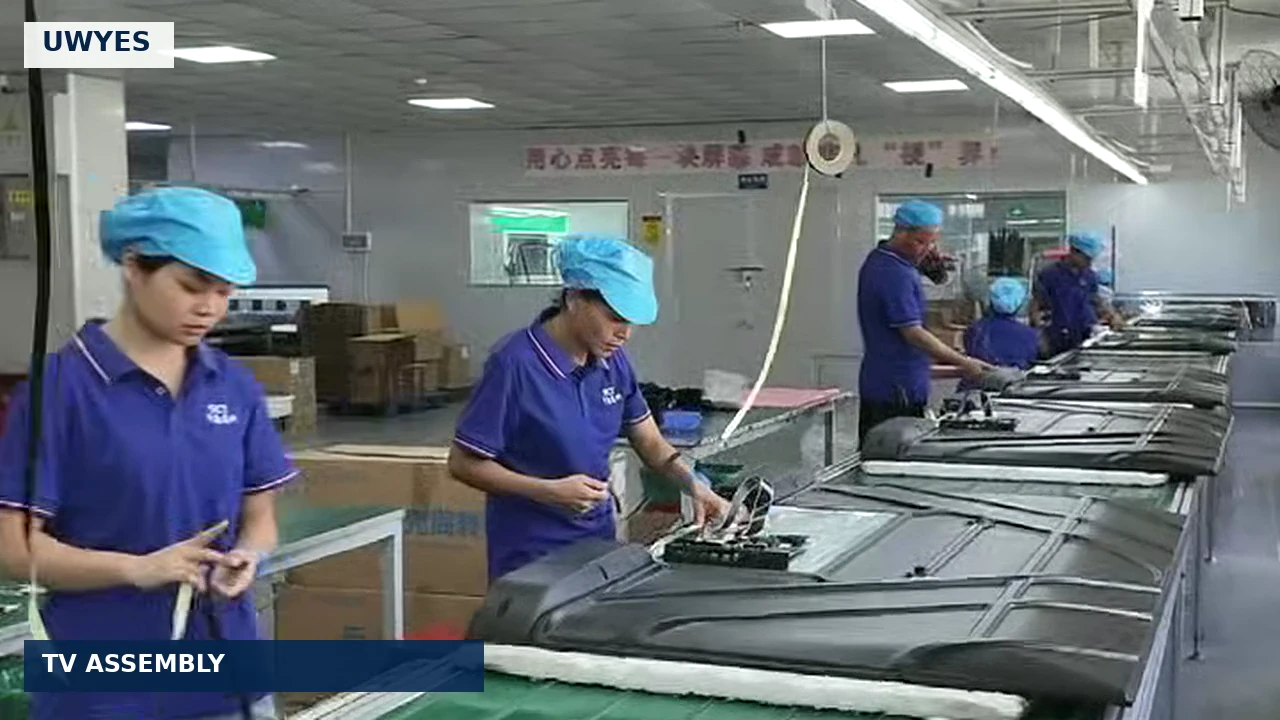
For television brands, importers and regional assembly partners, CKD, SKD, OEM and ODM describe different sourcing, assembly, customization and development responsibilities. The right route depends on the target market, local production capability, product specification and long-term plan. Start with the UWYES TV product range as a product-family reference, then define one model-specific project brief before comparing quotations.
CKD, SKD, OEM and ODM: the practical difference
CKD is a deeper component-level supply route for a buyer with local assembly capability. SKD uses agreed preassembled modules while leaving defined final assembly and testing work to the local partner. OEM places the buyer's brand on an approved configuration. ODM adds an agreed development scope beyond branding, such as hardware, mechanical, software or user-experience changes. The exact CKD or SKD split must be defined contractually; the label alone does not state which modules, tools, tests or local operations are included.
When CKD or SKD fits the buyer
A CKD program requires a controlled bill of materials, matched panel and mainboard configuration, firmware and regional-tuner review, assembly instructions, test procedures, quality responsibilities, service documents and local regulatory review. SKD can reduce the local assembly workload, but it still needs a documented kit boundary, packing identification, assembly sequence, inspection criteria and a pilot plan. See the TV SKD local-assembly solution for the project-implementation questions; this guide remains focused on how the buyer selects the sourcing model.
OEM and ODM: brand control versus defined development
OEM can cover an approved configuration with agreed branding, labels, manuals, packaging, remote-control treatment, accessories and regional settings. ODM should begin with a written engineering brief that identifies the market problem, development responsibilities, prototype milestones, sample acceptance, change control and software or intellectual-property boundaries. Neither term is an unlimited promise of customization.
Choose the product family separately from the supply model
LED and 4K LED programs can be planned around a target size mix, resolution, platform and regional configuration. For quantum-dot color positioning, review the QLED TV platform and the QLED TV OEM planning guide. For a premium local-dimming tier, review the Mini LED TV platform and the 144Hz Mini LED 4K OEM guide. For self-lit display requirements, review the OLED TV platform. A family name does not automatically establish brightness, refresh rate, HDR behavior, app availability, gaming performance or regulatory eligibility; those remain model-, software-, region- and project-specific.
Smart TV OS: confirm the exact route
UWYES can evaluate webOS, Google OS/Google TV, VIDAA OS, Whale OS and AOSP routes for the confirmed TV program. The OS route must be matched to the selected model, destination region and applicable authorization conditions. Certification, device approval, streaming-app availability, licensing, DRM, launcher control, OTA, software signing and third-party rights must not be assumed from a board name or a model for another market.
How to compare suppliers
- Compare the same commercial model: finished TV, OEM, ODM, SKD or CKD.
- Lock the selected model, display technology, platform route, tuner, inputs, accessories, branding and packaging in one request.
- Define the kit boundary, local assembly operations, inspection, pilot plan and final acceptance responsibilities.
- Confirm sample criteria, configuration revisions, market documentation, logistics and the person authorized to approve changes.
Information to provide before quotation
Provide target countries, channel, brand role, preferred supply model, size mix, TV technology, required smart platform, languages, tuner, inputs, branding assets, sample criteria, local assembly capability, quantity, destination and timing. For premium engineering and local-assembly implementation scope, use the TV OEM/ODM/CKD/SKD solution. MOQ, pricing, production timing, certifications, logistics and software rights are confirmed only for the selected model and project scope.
Prepare a comparable TV project brief
Choose a finished-TV or OEM route when the buyer needs a controlled branded configuration without local assembly. Choose SKD when the local partner can complete defined assembly from agreed modules. Consider CKD when the local operation can manage a deeper component-level scope. Use ODM when the commercial case justifies approved engineering milestones beyond branding. Review UWYES One-Stop Services and send the market, product family, preferred supply model and assembly plan through the project inquiry channel. UWYES can review a configuration against the confirmed project scope; compatibility, commercial terms and regional requirements remain subject to validation.
PROJECT HIGHLIGHTS
- Choose the supply model from the buyer's actual operating role
- Define CKD/SKD kit boundaries before quotation
- Keep OEM branding and ODM development scope separate
- Validate TV model, OS route, region, authorization and acceptance criteria
READY FOR A TECHNICAL CHECKLIST?
Send the application, quantity, city, required peripherals and current system. UWYES will review the configuration before preparing a quotation.
SEND REQUIREMENTS ON WHATSAPP →EMAIL UWYES →Every UWYES project is configured against the confirmed model, destination and customer requirement. Specifications and available options may vary by screen size and program.